



NGOs in Cambodia
now browsing by tag
Cambodian journalists alerted on climate change
Cambodian journalists alerted on climate change
 ©UNESCO/D.Weerapong
 ©UNESCO/D.Weerapong
 ©UNESCO/D.Weerapong
23.11.2011
Average Cambodians associated climate change with deforestation, disease and increasing temperature, whereas Cambodian NGO workers saw it as global increase in carbon dioxide emissions and deforestation, said BBC World Trust research officer.
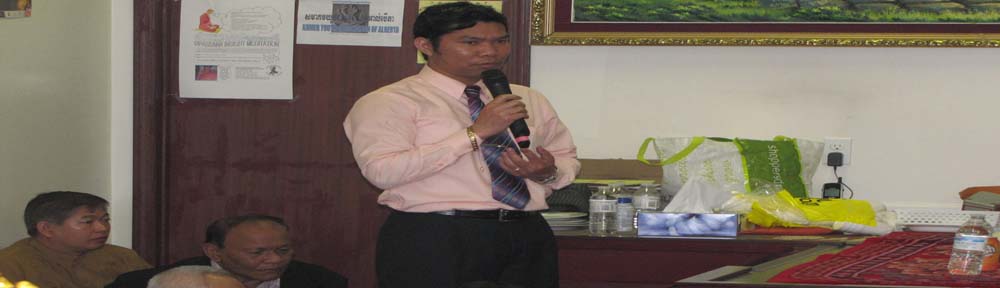
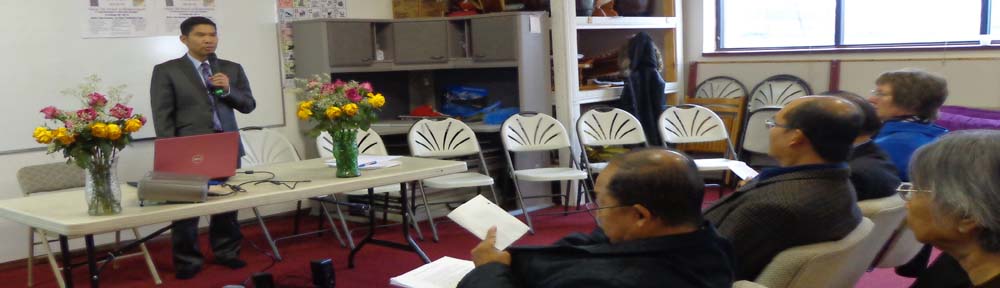
Mr. Trak Peaseth shared this message at a UNESCO climate change training to local journalists in Cambodia. He also emphasized the need for free and easy access to information regarding climate change in Cambodia.
A Climate Change Training Project funded by UNESCO and implemented by the Cambodian Center for Independent Media (CCIM) was recently held in Phnom Penh including a field trip to provide direct experience on climate change in Koh Kong organized by the International Union of Conservation of Nature (IUCN).
Successful NGO should be replicated
Wednesday, December 03, 2008
http://www.youtube.com/watch?v=7spLHsRIF9Q
 December 3, 2008
A. Gaffar Peang-Meth
Pacific Daily News (Guam)
Imperial expansionism, wars, disease, mismanagement of state power and the economy, and internal discord, have reduced Cambodia to its present size of 69,898 square miles, of which 90 percent is rural and poor. Thirty-five percent of the country’s 14 million people, earn less than 50 cents a day; some scavenge city dumps and live on rat meat.
Several miles southeast of Battambang city, on the Sangker River, lies a village called Ksach Poy. During the reign of the Khmer Rouge, villagers there revolted and the village became a killing field.
In 1979, after Vietnamese troops knocked Pol Pot out of power and sent his gangs fleeing to the Thai border, 16-year-old Soth Plai Ngarm, from a Khmer Rouge forced labor unit, walked through Ksach Poy, where his mother and relatives lived. He saw “dead bodies and corpses everywhere.” He shed tears and moved toward the Thai border. As Ngarm later speaks, he had “almost no hope” in humanity.
In the 1980s, destiny drew a path for Ngarm and me to meet.
Read More …