
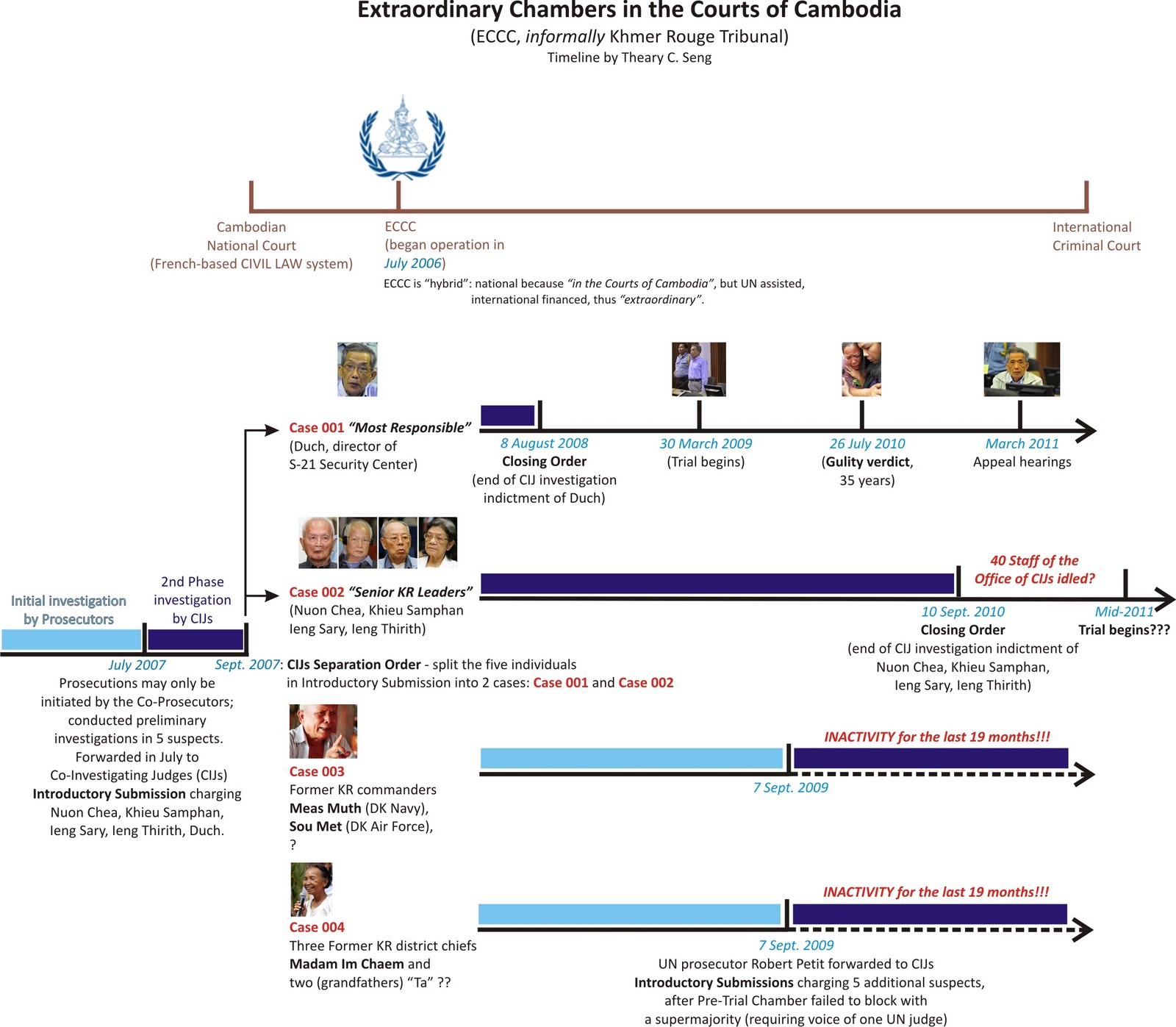
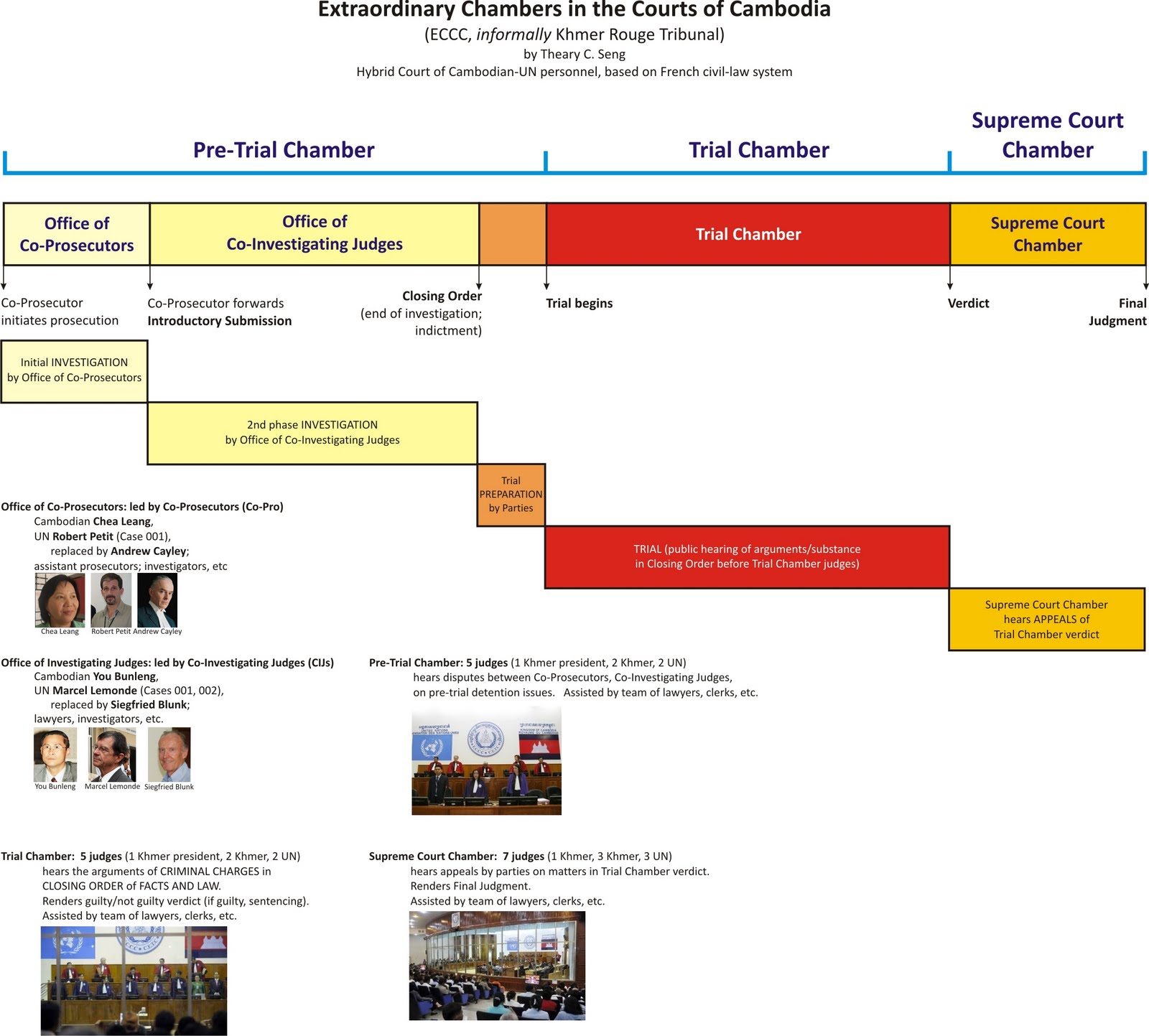
- 33. As of 17 April 1975, the CPK was governed by a Statute which had been initially adopted at the Party’s first Congress, in September 1960.74 In January 1976, a new Statute75 was adopted at the Party’s Fourth Congress76 that outlined the ideology, membership, structure and organization of the Party. Within the Statute a number of state bodies were particularized: the Revolutionary Army of Kampuchea,77 the national system of Party Committees,78 the Party Central Committee,79 and “various offices and ministries surrounding the Central Committee”.80 The Party itself was governed by a Central Committee and a Standing Committee.81
Category Archives: Politics
Emails from Canada: Sophoan Seng
- Wednesday, 30 March 2011 15:00
- Sophoan Seng

Alberta is well known as a leading exporter of natural resources like timber and oil in Canada. Large foreign companies from the US have invested billions of dollars extracting oil and gas in this territory to make up for the shortage of oil for energy in their country. Oil deposits which are called “oil sands” are very distinctive from what is found in those oil rich countries such as Iran or Saudi Arabia in the Middle East, and the monitoring and regulations of this lucrative industry has never been neglected.
The official website of the Alberta government describes Alberta’s oil sands as the backbone of the Canadian and the global economy, adding it is a great buried energy treasure which has continuously supplied stable and reliable energy to the world. Oil sands are a naturally composed mixture of sand, clay or other minerals, including water and bitumen, which is a heavy and extremely thick, sticky oil that must be treated before it can be processed by refineries to produce usable fuels such as regular gasoline and diesel. Oil sands can be found in many locations around the globe, but the Athabasca deposit in Alberta is the largest and most developed and it has utilised the most advanced technology to produce oil.
Canada’s Facts and Statistics Department has ranked Alberta’s oil sands second after Saudi Arabia in terms of proven global crude oil reserves. In 2009, the total proven oil reserves were 171.3 billion barrels, or about 13 percent of the total global oil reserves, which is about 1,354 billion barrels. The net income in the fiscal year of 2009 for the Alberta government was more than US$3 billion in royalties from oil sands projects, which was lower than 2008 at $20.7 billion. But they project it to skyrocket and revenue to hit $15 billion in the next few years. Ultimately, about 99 percent of Alberta’s oil comes from oil sands.
Continue reading
Cambodia seeks clarification of 1962 ICJ judgment
29 Apr 2011
As clashes with Thailand entered an eight day, Cambodia announced its submission to the ICJ regarding its 1962 decision to award it the 11th-century Hindu temple. Despite the almost fifty year old ruling, the problem over the ownership of a 4.6-square-km plot of scrub land surrounding the ruins has never been resolved, with both countries lay claim to the disputed area. The structure – one of the most celebrated example of Khmer architecture – has been the focus of strained relations between the neighbouring states, particularly since tensions it was granted UN World Heritage status in 2008.
The Ministry of Foreign Affairs and International Cooperation of Cambodia stated that the submission of the request was prompted by “Thailand’s repeated armed aggression to exert its claims to Cambodian territory, on the basis of its own unilateral map that has no legal basis”. It added that Cambodia also submitted a request to the ICJ to take conservatory measures, “in light of the repeated acts of aggression against Cambodian territory by Thailand’s armed forces”. “Cambodia considers conservatory measures as unavoidable for engendering a permanent ceasefire between the two countries, thus stopping the loss of lives and preserving the temple of Preah Vihear from serious damages, until the interpretation of the ICJ’ s 1962 judgment is finalised,” said the statement. A clarification by the court was of “the utmost necessity… in order to peacefully and definitely settle the boundary problem between the two countries in the area”.
Foreign ministry spokesman Koy Kuong stated “We especially want clarification about the vicinity around the temple. Thailand is using unilateral maps to claim our territory.”
Link: http://www.haguejusticeportal.net/eCache/DEF/12/567.TGFuZz1FTg.html
Some Justice for Cambodia
July 27, 2010
The New York Times
Editorial
It is disturbing that the Cambodian prime minister, Hun Sen, has said the court will not prosecute more suspects than the ones in custody. One has to ask, whom is he trying to protect?
Thirty years later, Cambodia’s “killing fields” are still haunting. A Buddhist memorial displays 5,000 haphazardly arranged human skulls — a tiny fraction of the 1.7 million Cambodians butchered by the Khmer Rouge.
While the world must never forget what happened, there is at least the beginning of justice. On Monday, a United Nations-backed tribunal convicted Kaing Guek Eav, known as Duch, of war crimes and crimes against humanity — the first major Khmer Rouge figure to be tried since the regime was overthrown. He has already spent 16 years in prison, and the tribunal sentenced him to another 19 years.
Duch oversaw a notorious prison where more than 14,000 people were tortured and killed. During an eight-month trial, he admitted to many of the charges against him. His defense — he was a “cog in a machine” — is no defense at all.
We understand why many of the victims of the Khmer Rouge and their families were disappointed that he was not given life in prison. He should never taste freedom, but at least he was held to account and he will be 86 years old when his sentence is served.
Continue reading


