តើកន្លះលានដុល្លាដើម្បីអភិវឌ្ឍន៏ឃុំ-សង្កាត់អាចទៅរួចដែរឬទេ?
Could half of million dollar US to develop Commune-Sangkat is possible or not?

តើកន្លះលានដុល្លាដើម្បីអភិវឌ្ឍន៏ឃុំ-សង្កាត់អាចទៅរួចដែរឬទេ?
Could half of million dollar US to develop Commune-Sangkat is possible or not?
 Posted in Culture, Economics, Education, Environment, Leadership, Politics, Researches, Social, Tourism
Op-Ed: www.martinalennalsaward.org & www.freethe5khmer.net
Mr Ny Sokha, Mr Yi Soksan, Mr Nay Vanda, Ms Lim Mony and Mr Ny Chakrya – also known as the “Khmer 5” – are five Cambodian human rights defenders who have been arbitrarily detained since 28 April 2016 as a result of their legitimate human rights work. The five human rights defenders have all been working in the field of human rights their entire lives, and together they have a long history of assisting victims of rights violations. They have taken leading advocacy roles, calling for the promotion and protection of human rights in Cambodia, and worked to empower thousands of Cambodians to actively defend their rights.
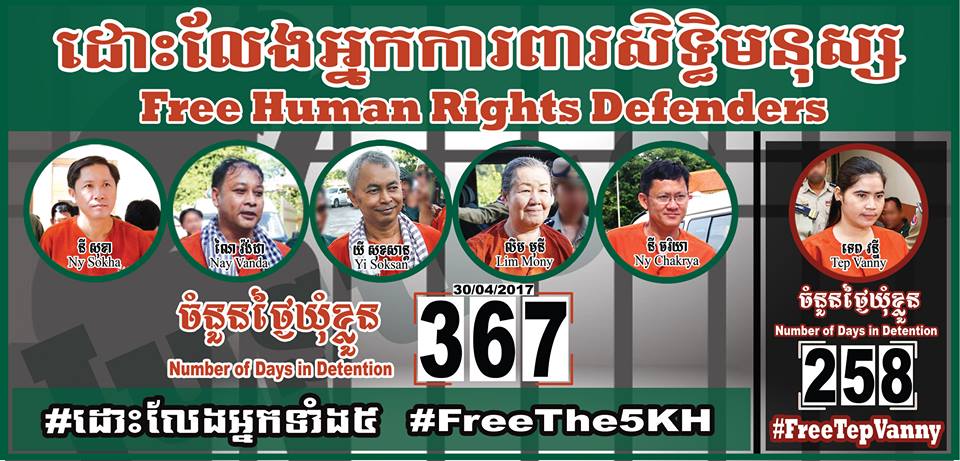 Ny Sokha, Yi Soksan, Vanda and Lim Mony are all senior staff members of the Cambodian Human Rights and Development Association (“ADHOC”), a Cambodian human rights NGO. Ny Chakrya is a former ADHOC staff member, and is now the Deputy Secretary-General of Cambodia’s National Election Committee (“NEC”). He is the only independent and non-partisan member of the body, responsible for election monitoring and internal audits into allegations of election fraud. ADHOC was founded by a group of former political prisoners in 1991 and is one of the leading civil society organisations protecting and promoting human rights, rule of law and democracy in Cambodia. It has played a vital role in protecting destitute victims of egregious human rights abuses, among others by providing them with advice, legal and material support.
The detention of the five human rights defenders comes in the context of an increasingly severe crackdown on civil society and the political opposition in Cambodia, with many individuals facing arrest and prosecution as a result of their work. The five had collectively worked on the case of Ms Khom Chandaraty, a woman alleged to have had an extra-marital relationship with Kem Sokha, then the acting leader of Cambodia’s largest opposition party. Since April 2016 Kem Sokha has been under investigation by Cambodia’s Anti-Corruption Unit (“ACU“) for involvement in prostitution, after leaked telephone conversations appeared to reveal a relationship with Khom Chandaraty. The ACU’s zealous pursuit of the case against Kem Sokha has met with significant criticism, including, for example, from four UN Special Rapporteurs, who noted that elements of the case “suggest that this entire episode is nothing more than a politically‐motivated persecution of civil society.“ In their roles at ADHOC, the five provided legitimate and routine legal and material assistance to Chandaraty, who had approached ADHOC for support upon being subject to investigation by the Antiterrorism Unit of the Ministry of Interior and later the Prosecutor of the Phnom Penh Municipal Court as a result of the alleged affair and the leaked audio recording on her Facebook profile page. After changing her narrative from denying the alleged affair to admitting she had indeed engaged in an extra-marital relationship with Kem Sokha, on 22 April 2016, Khom Chandaraty alleged in an open letter that the five had convinced her to lie in the course of investigations.
Posted in Culture, Economics, Education, Environment, Leadership, Politics, Researches, Social
This part (104), Mr. Sophan analysed on “Government belongs to the Cambodian people, no one can privatize government”.
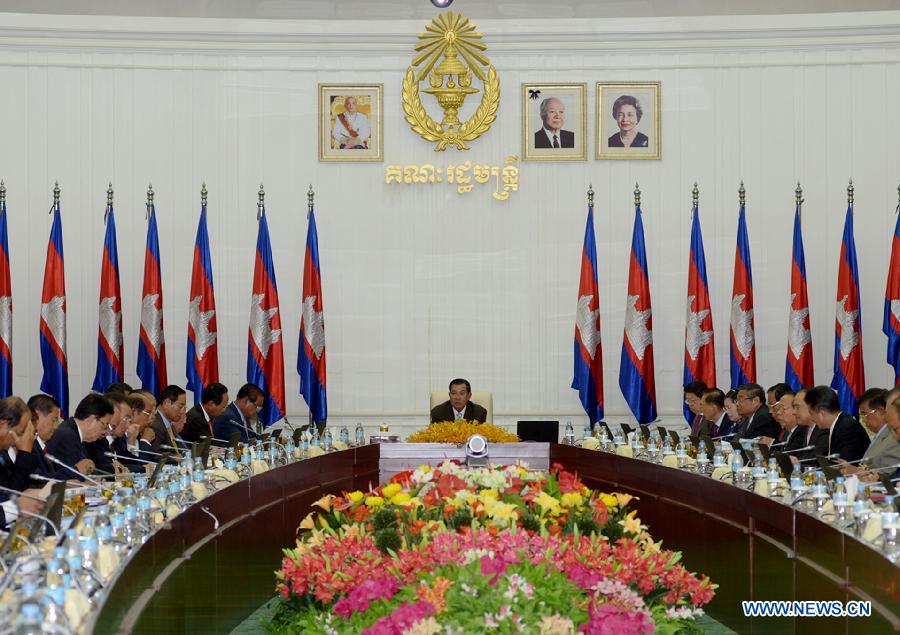 With this prudent aspect, Cambodia is Constitution-based nation. As said, political parties are just part of the nation’s actors paralleling to civil societies and other spatial communities in which hose actors are generally called “stakeholders”.
Cambodian people have placed in a grey zone in comprehending the government leadership especially the government has irresponsibly worked to cloud the Cambodian people not to see the government as it is belonging to the Cambodian people through all provisions by the current Constitution, not belonging to any political party.
One of the examples is government leadership structure or bureaucrats. The government-led part is not the government although those top leaders including Prime Minister, Deputy Prime Ministers, Council Ministers, and Secretary of States or all of them are called “members of cabinet”, are from a party.
Those members of cabinet swore in to office to serve the people, to abide by the Constitution, to protect national interests, and to protect Constitution etc. Each provided royal degree to those members mean they have passed credentials, qualifications, and undertaken high esteem of responsibility in front of the King, the Cambodian people, and the Constitution.
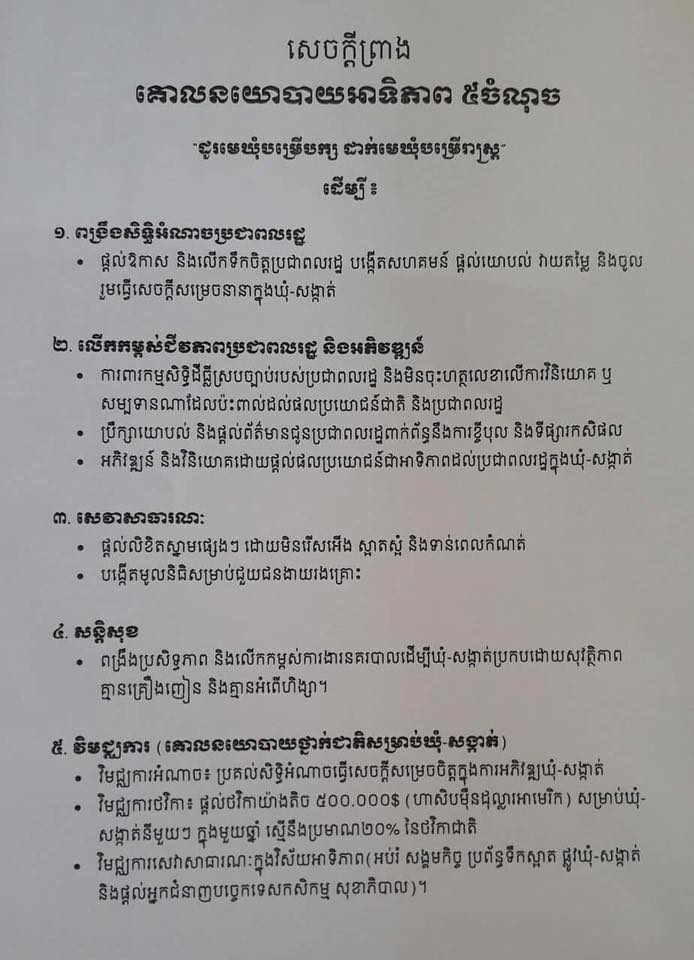
This part (101), Mr. Sophan analysed on the standard of policy platform for political parties to campaign for vote. By describing the five points of CNRP, Mr. Sophan elaborated the exclusive applicability, financial manageability, and its merits and wills to implement them aiming to success.
The five points that are covering on all political aspects of good governance, respects of human rights, sustainable development and increasing family income, especially the strengthening of local government through allocating $500,000 US to each commune for its operational budget, all are seen critical.